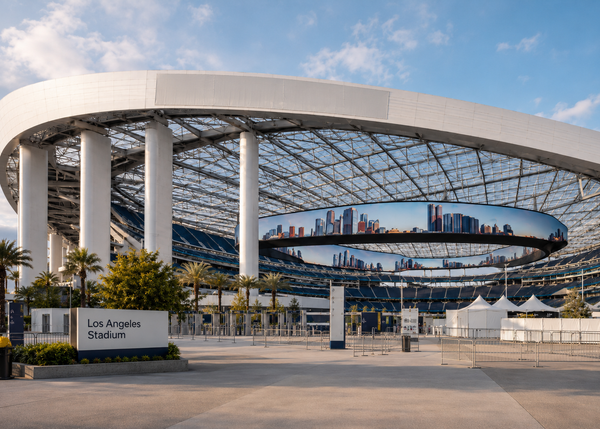
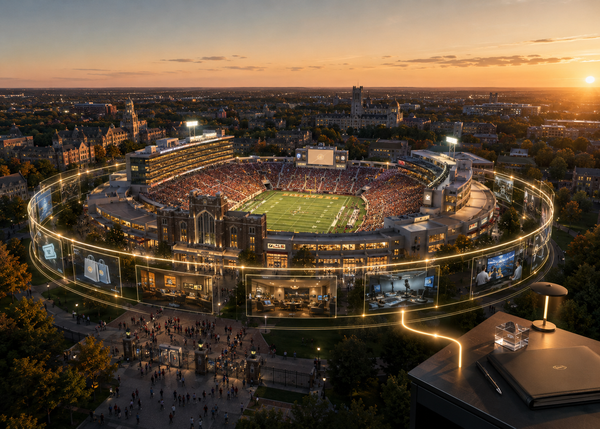
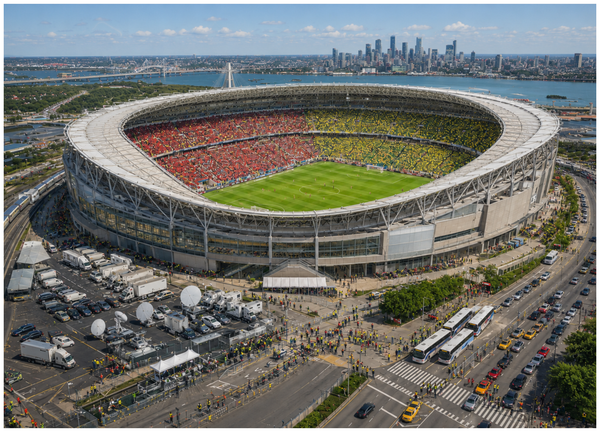
One Match, Many Products
You watch one match. The rights system sees a live feed, a stream, a clip library, a sponsor window and an archive, each sold separately.
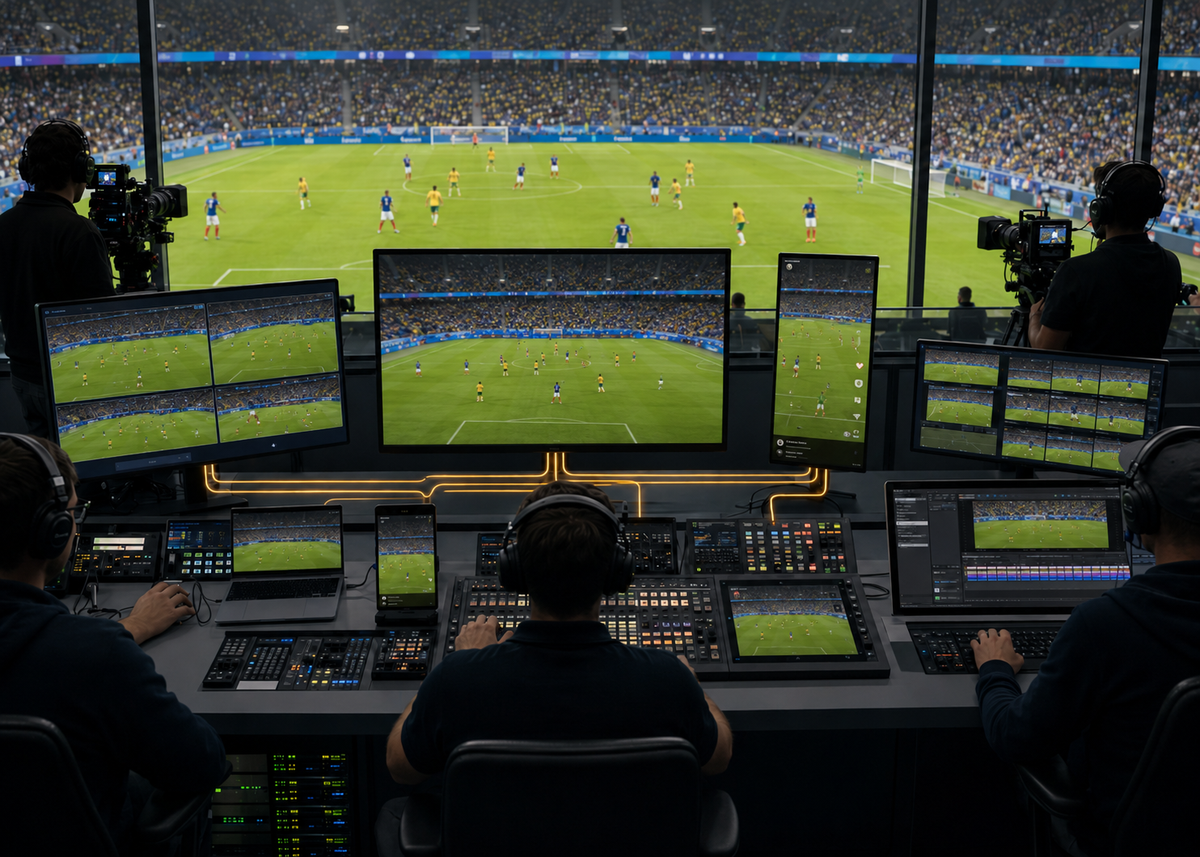
You see one match.
The system sees a live feed, a stream, a highlight package, a clip library, a social layer, a sponsorship window, and an archive.
That gap — between the single event you watch and the stack of products it becomes — is the entire business of World Cup media rights.
The match is the visible thing. The product line is the structure beneath it.
A World Cup match is not commercialized as one ninety-minute broadcast. It is the raw material for a catalogue, and the rights system exists to decide how that catalogue is divided, who is allowed to sell each piece, and to whom.
The football happens once. Everything built from it is sorted, priced, and routed separately.
So the useful question is not how much one match is worth. It is how many products one match becomes — and who controls each one.
The live layer: scarce by design
Start with the most valuable product, because it sets the price for everything below it: the live broadcast.
A live World Cup match happens once. Only the broadcaster holding the live right in a given market can carry it, and that scarcity is the whole source of its value.
The live layer is protected through exclusivity, usually by territory and language, which is why it remains the premium layer.
It is also why television broadcasting rights are FIFA's single largest revenue category — reported at about $3.426 billion, roughly 45 percent of everything FIFA took in across the 2019–2022 cycle.
Everything else in the stack is a version of the same footage at lower scarcity, and therefore under a different monetization model.
"The broadcast" is already many products
But "the live broadcast" is not one product either.
FIFA does not commercialize the match as one universal product. It divides live and related media rights by territory, language, platform, and window.
In the United States alone, the English-language broadcast runs through FOX and FS1, streams on FOX One, and — for two opening matches — was simulcast free on Tubi. The Spanish-language broadcast runs through Telemundo, Universo, and Peacock. In every other market, different broadcasters hold different windows again.
So before the same footage has even left the stadium, it has been split into dozens of separate live products — one per market, language, and platform tranche.
The single feed is plural from the first whistle.
The platform layer: reach, kept on a leash
Once the match is live, the footage extends onto platforms built for the opposite of scarcity: reach.
For 2026, FIFA created a new designation — the Preferred Platform — and granted it to two social networks. TikTok was named FIFA's first-ever Preferred Platform in January 2026; YouTube followed in March.
Under both agreements, the tournament's media partners can stream parts of matches, post curated clips, and draw on content FIFA produces specifically for those platforms; on YouTube, they can also publish extended highlights and Shorts. YouTube partners gained the option, for the first time, to live-stream the opening ten minutes of every match — and to stream a select number of matches in full.
The important word is controlled. These are not open floodgates.
TikTok's agreement explicitly pairs the new access with anti-piracy measures that protect FIFA's intellectual property. The platforms widen the funnel without breaking the exclusivity beneath it — and their stated purpose is to pull fans back toward the paid broadcasts, not to replace them. TikTok says fans are 42 percent more likely to tune in to live matches after watching sports content on its platform.
Reach is the product here. It is opened selectively, because reach feeds the layer that is actually sold.
Reuse, and its afterlife
Below the platform deals sits the widest layer of all: reuse.
The same match is recut by rights holders into short and extended highlights across their broadcast, streaming, and social channels; into news-access clips for bulletins; and, eventually, into archive.
FIFA unlocks past tournaments from its Digital Archive — full-length classic matches — and lets selected creators build on that footage too.
This is the slowest-moving, longest-living layer: a live broadcast is worth the most for ninety minutes, while an archived match earns quietly for years.
But even here, nothing is free of rules. What can be shown, where, for how long, and by whom is all defined.
The reuse is wide. It is not unmanaged.
The attention layer: advertising inventory
Then there is the layer that is not footage at all. It is attention — and a single match carries several separate advertising surfaces, each sold by a different party to a different buyer.
The pitch-side advertising sits inside FIFA's centrally managed commercial environment: host venues are stripped and rebranded for the tournament, and commercial visibility inside the stadium is reserved for FIFA-approved marks, installations, and sponsors. That is why the boards you see during a World Cup match carry official tournament sponsors rather than the stadium's usual local advertisers.
The broadcast breaks — before kickoff, at half-time, after the final whistle — are sold separately by each market's broadcaster to its own advertisers. And 2026 added a slot football has never had: mandatory three-minute hydration breaks midway through each half. Broadcasters were permitted to sell them. FOX ran full-screen commercials during them in the United States; Telemundo kept its cameras on the pitch. The same pause became advertising inventory in one feed and live coverage in the other.
And the digital clips and streams carry the platforms' own ad products, with media partners able to monetize their YouTube and TikTok coverage.
Behind all of it sits FIFA's tiered commercial model: global FIFA Partners who buy rights across every FIFA event, World Cup Sponsors who buy this tournament, and, below them, regional and host-city supporters who buy visibility in a single market.
Marketing rights are FIFA's second-largest revenue category, at about $1.795 billion across the 2019–2022 cycle.
One match. Several attention surfaces. Several sellers.
Now multiply by 104
Everything above describes a single game. 2026 has 104 of them.
The expansion from 32 teams to 48 — from 64 matches to 104 — is usually framed as a sporting decision. Commercially, it is a multiplier.
Each new match is another full product line: another set of live windows, another highlight package, another clip library, more perimeter boards, more broadcast slots, more platform inventory, more sponsor activation.
The tournament did not just add forty matches. It added forty more catalogues.
Segmentation, not duplication
Set the layers side by side and the structure is clear — and so is the line it must not cross.
This is not FIFA selling the same match many times over. The live exclusive is protected within each territory, language, or platform window.
The clips, streams, and social layers are mostly reach and promotion, engineered to point audiences back toward the broadcasts.
The large revenue still concentrates in the scarce live layer; the layers beneath it add audience and incremental income, not a second premium sale.
It is one match, segmented — divided by territory, language, platform, window, and surface, and routed to the buyer each piece fits.
You watch one game.
The system runs a catalogue.
Sources
- FIFA Annual Report 2022 — 2019–2022 revenue Primary source · Broadcasting rights at $3.426bn (about 45%) and marketing rights at $1.795bn.
- FIFA — TikTok named first-ever Preferred Platform for World Cup 2026 Primary source · Partial-match streaming, curated clips and FIFA-produced content for media partners; anti-piracy commitments.
- FIFA — YouTube Preferred Platform agreement for World Cup 2026 Primary source · Extended highlights and Shorts; first-ever option to stream the opening ten minutes of every match; Digital Archive unlocked.
- FOX Sports — FIFA World Cup 2026 broadcast schedule Primary source · English-language coverage across FOX and FS1, streaming on FOX One, and free Tubi simulcasts.
- Telemundo — World Cup 2026 coverage plan Primary source · Spanish-language coverage across Telemundo, Universo and Peacock.
- FIFA — Global sponsorship packages for World Cup 2026 sold out Primary source · The tiered Partner, Sponsor and Supporter commercial structure.
- FIFA — Brand Protection Primary source · Protection of official marks and the commercial environment reserved for FIFA's affiliates.
- TikTok Newsroom — TikTok and FIFA Preferred Platform agreement Context source · TikTok's own claim that sports content lifts live tune-in by 42%.
- Reuters — World Cup matches to have mandatory hydration breaks in each half Context source · The three-minute hydration-break rule.
- SportsPro — World Cup opener ratings and hydration-break advertising Context source · Broadcasters permitted to sell hydration-break ads; FOX selling them, Telemundo declining.
- Yahoo Sports — Fox versus Telemundo: how hydration breaks and commercials are disrupting World Cup viewing Context source · FOX's full-screen ads vs Telemundo's on-pitch coverage during the same breaks.
- Sports Business Journal — 2026 World Cup sponsors and Host City Supporters Context source · The host-city sponsorship tier.
Pitch & Ledger
Get the systems behind the spectacle in your inbox.
Independent sports-business analysis, delivered free.